What NYC's New Existing Building Code Means for Development
New York City is retiring the use of its 1968 NYC Building Code for existing buildings undergoing renovations and alterations. Beginning in July 2027, NYC will rely upon its modified adoption of the 2015 International Existing Building Code (IEBC) to address construction within existing buildings. For retail developers with projects in the pipeline, the update will change some of the code requirements. So, what impact might this have?
Traditionally, there are three compliance methods provided for in the IEBC. NYC will recognize some aspects of the IEBC but with some NYC modifications. One example is the performance method, which gives design professionals an option in older buildings when means of egress and fire protection requirements might interfere with design or preservation objectives. NYC’s version of this will be using what they are referring to as the “Building Safety Performance and Scoring Method”. This option will only be permitted on buildings built prior to July 1, 2008.
The other two methods provided for within the IEBC are the prescriptive method and the work area method. NYC is not utilizing the prescriptive method, and the work area method is replaced by NYC’s own alteration types explained below.
When a Project Counts as ‘Limited Alterations’
For projects with limited scope of work, NYC will allow for what it refers to as “limited alterations”, which covers work for plumbing, sprinkler, standpipe, reroofing replacement and elevator alterations – as long as it’s independent of any other associated work that would otherwise require a permit. There will be an annual spending cap on new installations into an existing building or system, though there will not be a spending cap on existing systems that are altered, replaced or repaired.
In addition, work that would not require a mandatory department inspection would fall into this category. If work exceeds the “limited alterations” category, then it moves to one of the alteration types. In practice, this category is meant for smaller, everyday repairs and upgrades — not full renovations — so they can move forward without triggering a full code review.
The Alteration Types:
- Alteration Level 1 (which has a work area of less than 50% of the building).
- Alteration Level 2 (which has a work area greater than 50% of the building).
- Change of Occupancy.
- Additions.
- Relocated, Moved or Raised Buildings.
Under any alteration type, if the scope of work increases “the floor surface area of a building” by more than 110%, then the building must comply with the code as if it were a new building. “Floor surface area” means the gross square footage of every floor and roof surface, including cellar and attic areas.
Put simply: expand a building past that point, then the NYC Building Code treats the project as if it were a new building. This includes structural alterations as well as building additions. In addition to the 110% limitation, an alteration that affects more than 75% of the building area must comply with new construction in many categories such as sprinklers, some means of egress requirements, and electrical, mechanical, plumbing and fuel gas system requirements.

 Back to Main Blog Page
New Rules for Escalators
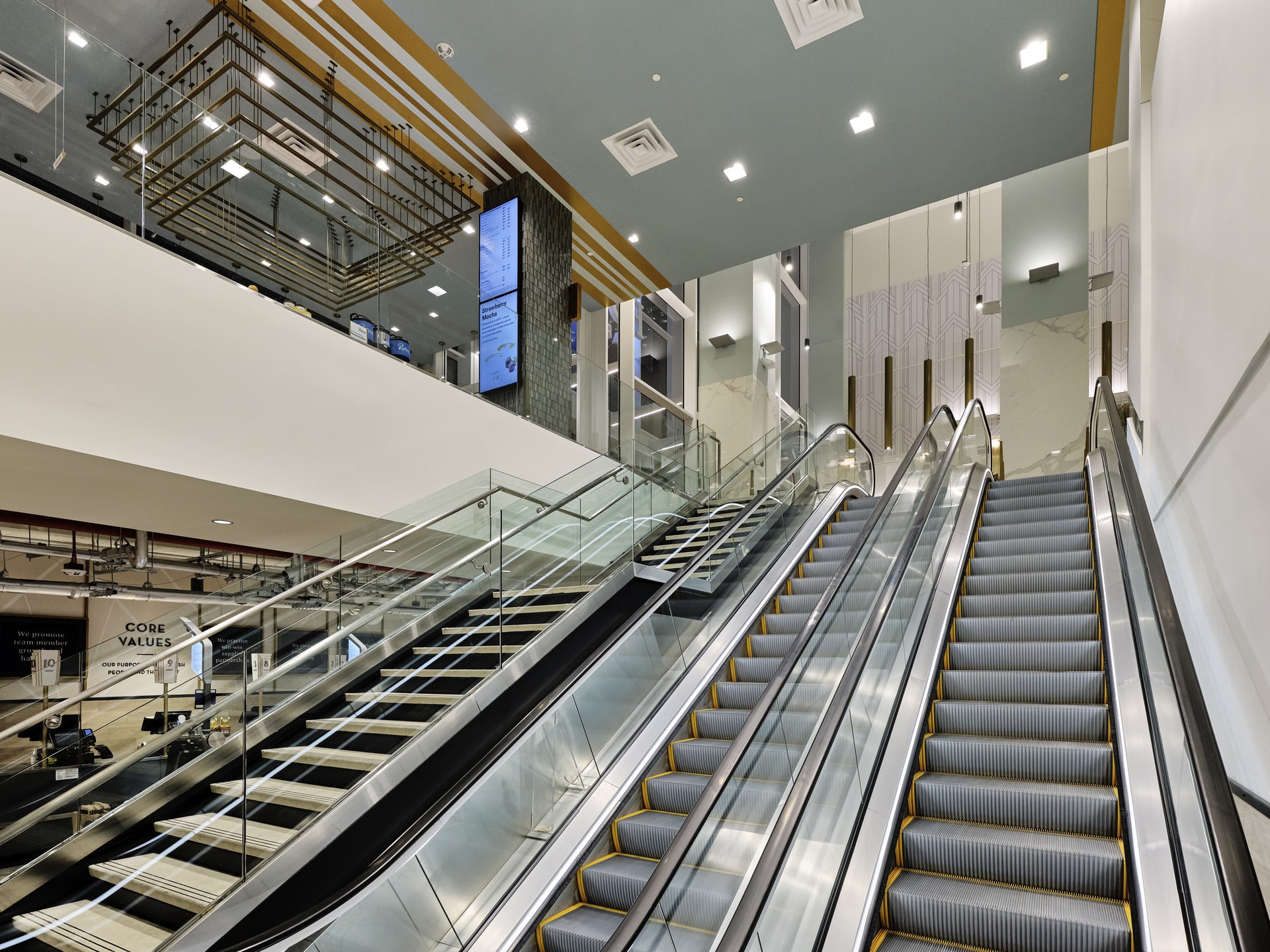
Escalators are a good example of how much stricter the rules are during a renovation. Under the 1968 NYC Building Code, an escalator could be used as part of the means of egress. That’s changing.
If the escalator is not touched during an alteration, it can stay as-is. However, if an existing escalator is altered or relocated, it will need to comply with additional code requirements:
- It can only serve up to 50% of the required egress capacity (calculated at 0.3 inches of tread width per occupant).
- The tread must be at least 40 inches in width.
- The building must have an automatic sprinkler system throughout, and the escalator may also need to be enclosed like an interior exit stairway.
Exit Remoteness
Plumbing Fixtures
Another notable change: if the proposed work will increase the existing occupant load by greater than 10%, additional plumbing fixtures may be required. This is a change from the IEBC, which recognizes an increase of 20% before additional plumbing fixtures are required. For a retail space planning on increasing capacity, that change would have budget impact.
Accessibility
Under the IEBC, the standard is the 20% rule: 20% of construction costs must be spent on bringing noncompliant items up to code. Bathrooms often account for a large share of the overall budget However, the NYC Building Code adjusts the threshold based on alteration type. A Level 1 alteration increases the rule to 25%.
A building undergoing a Level 2 alteration will be required to fully comply with the accessibility provisions of the NYC Building Code, which means a large enough renovation project should plan on bringing the entire building up to current accessibility standards.
What it Means for Your Next Project
Where a project lands in this framework shapes what’s required, what’s possible, and what it costs to get there. That is exactly why it’s worth sorting out early, before design decisions are locked in. Our team works through frameworks like these and we’re here to talk through what it means for your specific project.